
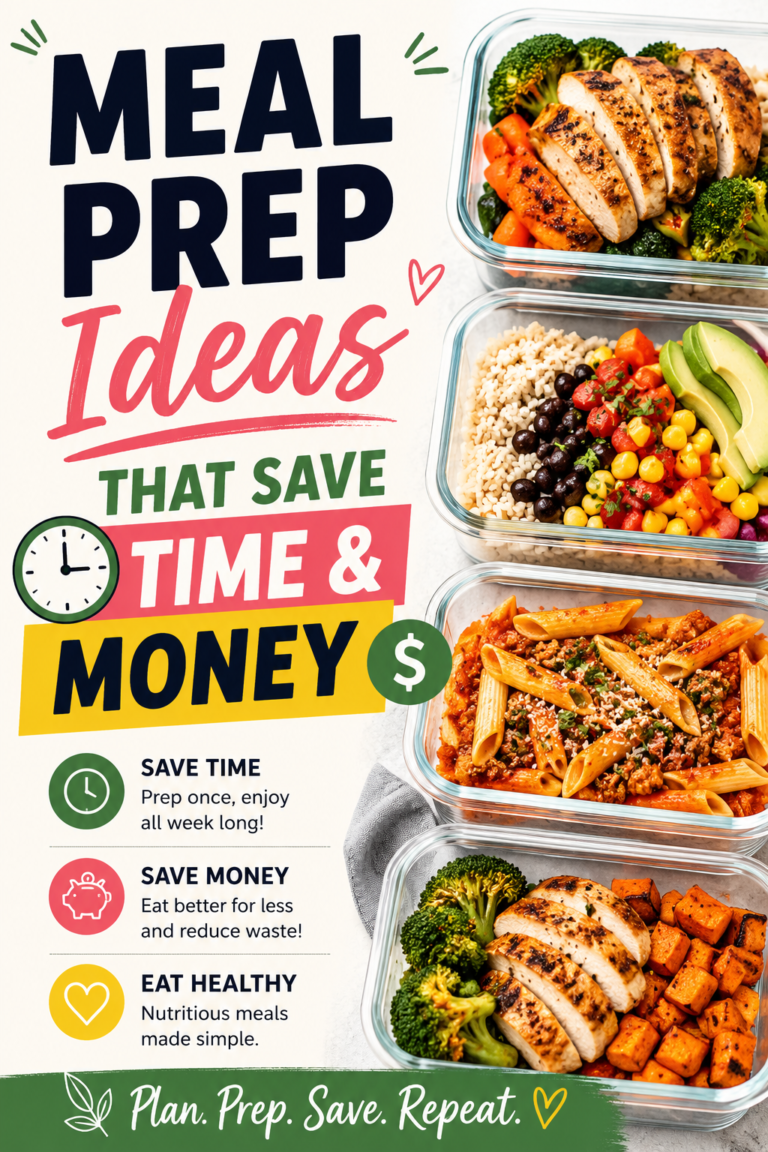
Meal prepping has become one of the most practical ways to manage a busy lifestyle while staying healthy and saving money. Instead of deciding what to cook every day, you prepare meals in advance—usually for 2 to 5 days—and store them in the fridge or freezer. The result? Less stress, fewer food decisions, and a significantly lower grocery bill.
Here are some simple, realistic meal prep ideas that actually work in everyday life.
1. Start With Budget-Friendly Staples
The key to saving money with meal prep is building your meals around cheap, versatile ingredients. You don’t need fancy items—just smart basics.
Some great staples include:
- Rice, pasta, oats
- Eggs
- Potatoes and sweet potatoes
- Lentils and beans
- Frozen vegetables
- Chicken thighs or canned tuna
These ingredients can be mixed and matched into multiple meals without getting boring.
2. Cook Once, Eat Multiple Times
The biggest time-saver in meal prep is batch cooking.
For example:
- Roast a tray of chicken and use it for wraps, salads, and rice bowls
- Cook a large pot of lentil curry and portion it for 3–4 meals
- Boil rice or quinoa in bulk and store it for the week
This method reduces cooking time to just 1–2 sessions per week.
3. Simple Breakfast Meal Prep Ideas
Breakfast is often rushed, so prepping it in advance helps a lot.
Try these:
- Overnight oats with milk, yogurt, and fruits
- Egg muffins baked with vegetables and cheese
- Smoothie packs (freeze fruits and greens in bags)
- Chia pudding with honey or berries
These options are quick, healthy, and very cheap per serving.
4. Lunch Ideas That Stay Fresh
Lunch meals should be easy to pack and reheat.
Good options include:
- Rice bowls with chicken, veggies, and sauce
- Pasta with tomato or pesto sauce
- Chickpea salads with cucumber, tomato, and olive oil
- Wraps filled with tuna, eggs, or leftover meat
Use airtight containers to keep meals fresh for several days.
5. Dinner Meal Prep for Busy Evenings
After a long day, having dinner ready is a huge relief.
Try:
- Stir-fry vegetables with rice or noodles
- Sheet-pan meals (chicken + vegetables roasted together)
- Soups like vegetable, lentil, or chicken soup
- Chili made with beans and minced meat
These meals are filling, affordable, and easy to reheat.
6. Smart Grocery Shopping Strategy
Meal prep only saves money if you shop smart.
Tips:
- Plan your meals before going to the store
- Buy in bulk for rice, oats, and frozen foods
- Choose seasonal vegetables
- Avoid pre-packaged meals and snacks
- Stick to your list to avoid impulse buying
A simple plan can cut your grocery bill significantly.
7. Storage Tips to Keep Food Fresh
Proper storage is important for safety and taste.
- Use glass containers for better freshness
- Label meals with dates
- Store fridge meals for up to 3–4 days
- Freeze extra portions for later in the week
This reduces food waste and keeps meals safe to eat.
8. Example 3-Day Meal Prep Plan
Day 1–3:
- Breakfast: Overnight oats with banana
- Lunch: Chicken rice bowl with vegetables
- Dinner: Lentil curry with rice
Simple, repetitive, and cost-effective—perfect for beginners.
Final Thoughts
Meal prepping isn’t about eating the same boring food every day. It’s about planning smart, cooking efficiently, and reducing daily stress. Once you build the habit, you’ll notice three big benefits: more free time, less spending, and healthier eating.
Start small, stay consistent, and adjust meals based on your lifestyle. Even prepping just two days ahead can make a big difference.

I’m Grayson Watson, your frugal companion and the brain behind this money-saving extravaganza. Strap yourself in, because we’re about to embark on a wallet-friendly adventure like no other. Learn More!