

A few months ago, I sat down and did something I’d been avoiding for a long time: I actually looked, line by line, at everything I spent money on in a typical month. Not a rough guess. Not “I think I spend about this much on groceries.” An actual, honest look at every transaction from the past two months, pulled straight from my bank statements.
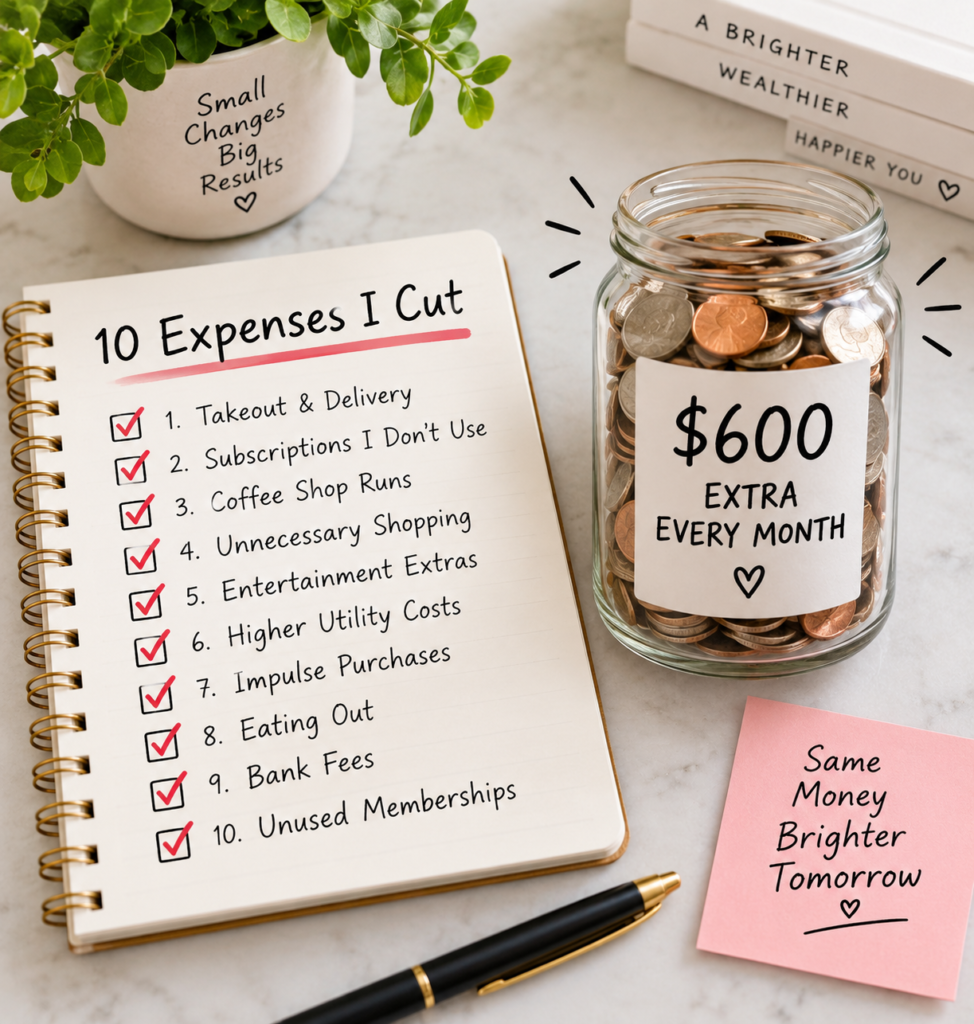
What I found wasn’t one big dramatic overspending habit. It was ten smaller things, each quietly costing more than I realized, that added up to $600 a month I didn’t even know I was losing. No dramatic lifestyle overhaul. No giving up everything I enjoy. Just ten specific changes, made one at a time over about six weeks, that freed up real money without making my life feel restricted.

Here’s exactly what I cut, in the order I tackled them, along with what each one actually saved me.
1. Unused Subscriptions — $47 a Month
This was the first thing I checked, and it was honestly embarrassing. I found a meditation app I hadn’t opened in four months, a cloud storage upgrade I didn’t need, and a streaming service I’d forgotten I even signed up for during a free trial that quietly converted to a paid plan. Canceling all three took about ten minutes total.
2. Streaming Services Running in Parallel — $28 a Month
I was paying for three different streaming platforms simultaneously, even though I realistically only had time to watch content on one at a time. I switched to rotating them — subscribe, binge what I want, cancel, move to the next one the following month. Same access to everything, spread out instead of stacked.
3. Daily Coffee Shop Habit — $65 a Month
This one stung a little to admit. Five coffee shop visits a week, at roughly three dollars each, adds up faster than it feels like in the moment. I didn’t cut it out entirely — I just brought it down to twice a week and started brewing at home the other days.
4. Takeout and Delivery Orders — $110 a Month
Between the food cost, delivery fees, and the tip that always feels a little too small once the total comes up, my takeout habit was quietly one of the most expensive lines in my entire budget. I set a firm limit of one order a week and started batch cooking on Sundays so a home-cooked option was always ready during busy weeknights.
5. Grocery Impulse Buys — $40 a Month
I used to shop without a list, grabbing whatever looked good in the moment. Once I started building a specific meal plan before each trip and shopping strictly from that list, my grocery total dropped noticeably, without changing what I was actually eating.

6. Gym Membership I Barely Used — $45 a Month
I was paying for a gym I visited maybe twice a month. I canceled it and switched to home workouts and outdoor running, which cost nothing beyond what I already owned. If you genuinely use your gym membership regularly, this one obviously doesn’t apply — but it’s worth being honest with yourself about how often you actually go.
7. Bank Fees I Didn’t Notice — $15 a Month
A monthly maintenance fee on my checking account, plus an occasional overdraft fee from cutting things too close near payday. I switched to a no-fee account and set up a low-balance alert so I’d catch things before they became a problem.
8. Phone Plan I Was Overpaying For — $25 a Month
I called my provider, mentioned I was considering switching, and was offered a lower-cost plan with essentially the same data and features I was already using. A five-minute phone call, $25 a month saved, going forward indefinitely.
9. Retail Impulse Purchases — $60 a Month
Small, unplanned purchases — a candle here, a shirt there, nothing individually significant — were adding up more than I expected. I started applying a 24-hour rule: if it’s not something I planned to buy, I wait a full day before deciding. More often than not, the urge fades completely.
10. Auto-Renewing Insurance I Never Shopped Around For — $50 a Month
I’d been with the same car insurance provider for years, assuming loyalty meant a good rate. I spent twenty minutes getting quotes from two other providers and found a comparable policy for significantly less. Switched, and never looked back.
Adding It All Up
| Expense Cut | Monthly Savings |
|---|---|
| Unused subscriptions | $47 |
| Streaming service overlap | $28 |
| Daily coffee habit | $65 |
| Takeout and delivery | $110 |
| Grocery impulse buys | $40 |
| Unused gym membership | $45 |
| Bank fees | $15 |
| Overpriced phone plan | $25 |
| Retail impulse purchases | $60 |
| Car insurance | $50 |
| Total | $485 |
Rounding up with a few smaller changes I made along the way — adjusting my thermostat slightly and switching a few grocery items to store brands — I landed right around $600 a month in total savings.
What Actually Made This Work
None of these changes happened overnight, and I want to be honest about that. I didn’t sit down and cut all ten expenses in a single weekend. I tackled two or three a week over about six weeks, starting with the easiest ones — canceling subscriptions, calling my phone provider — before moving to the habit-based changes that took a bit more consistency, like the coffee and takeout limits.
The biggest shift wasn’t any single cut. It was actually looking at my spending honestly instead of guessing, and being willing to question habits I’d stopped noticing because they felt normal. Most of that $600 wasn’t hiding in one dramatic expense. It was spread across ten small, easy-to-ignore leaks that added up to something significant once I finally paid attention.
If you’re looking at your own budget and feeling like there’s nothing left to cut, I’d genuinely encourage you to do what I did first: pull up two months of real bank statements and go through every single transaction. You might be surprised by what you find. I certainly was.

I’m Grayson Watson, your frugal companion and the brain behind this money-saving extravaganza. Strap yourself in, because we’re about to embark on a wallet-friendly adventure like no other. Learn More!