
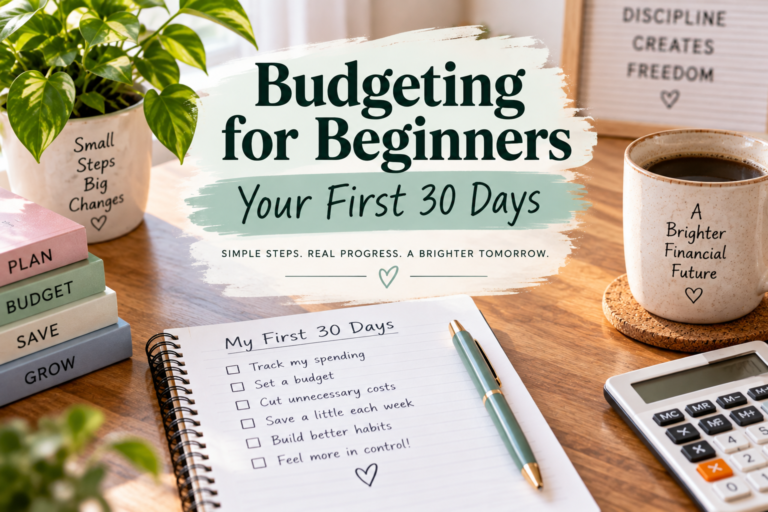
Starting a budget can feel like homework nobody assigned you. But the truth is, a budget isn’t a punishment — it’s just a plan for your money so it stops feeling like it disappears on its own. The first 30 days are the hardest part, because you’re building a habit from scratch. After that, it starts running on autopilot.

Here’s a simple, low-pressure roadmap to get you through your first month.
Week 1: Figure Out Where You Actually Stand

Before you can plan where your money goes, you need to know where it’s currently going. Pull up the last one to two months of bank and credit card statements and add up your income and your spending, sorted into rough categories: rent, groceries, transportation, subscriptions, eating out, and so on.
Don’t judge yourself here. The goal isn’t to feel guilty about the coffee habit — it’s to get an honest baseline. Most people are surprised by at least one number, usually food delivery or subscriptions they forgot about.
This week’s goal: Know your total monthly income and your total monthly spending, broken into categories.
Week 2: Build Your First Budget Framework
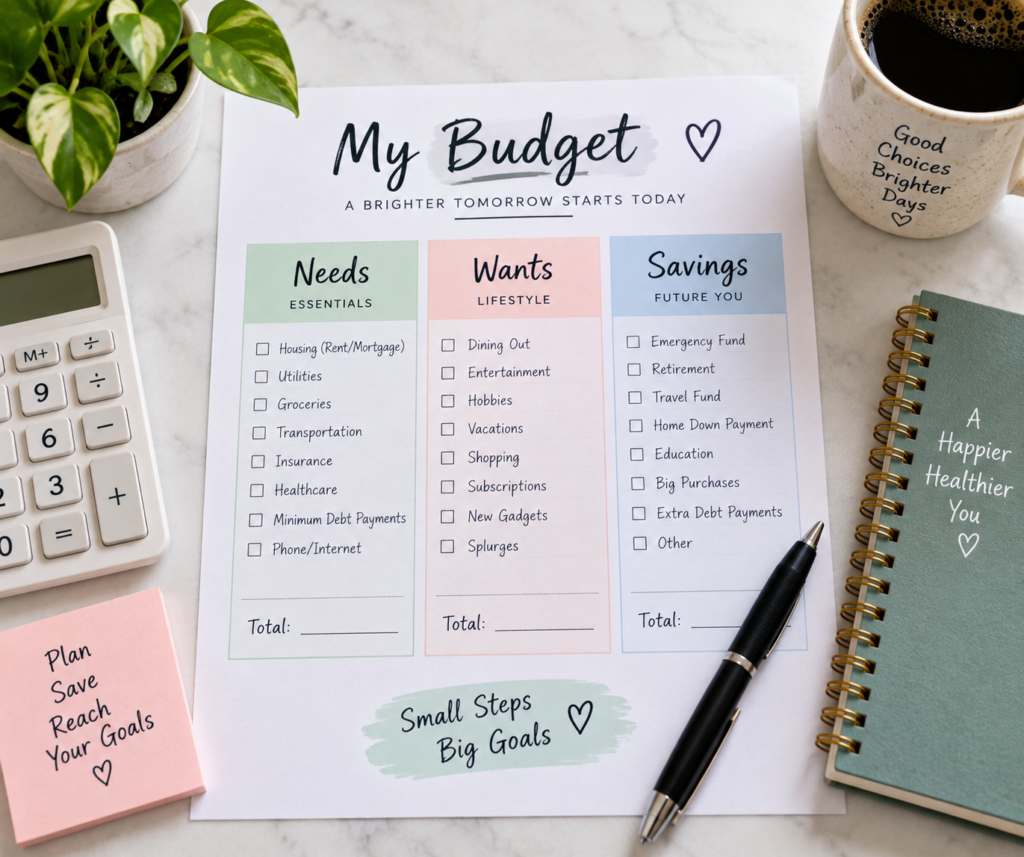
Now that you know your numbers, pick a simple framework rather than inventing one from scratch. A popular starting point is the 50/30/20 rule: roughly 50% of income toward needs (rent, utilities, groceries, minimum debt payments), 30% toward wants (dining out, entertainment, hobbies), and 20% toward savings and extra debt payoff.
These percentages are a starting guideline, not a law. If your rent alone eats 45% of your income, that’s fine — it just means your “wants” category needs to flex smaller for now. The point is having a plan, not hitting a perfect ratio in month one.
This week’s goal: Assign every dollar of your income to a category, even if the numbers are rough.
Week 3: Track Every Day, Adjust As You Go
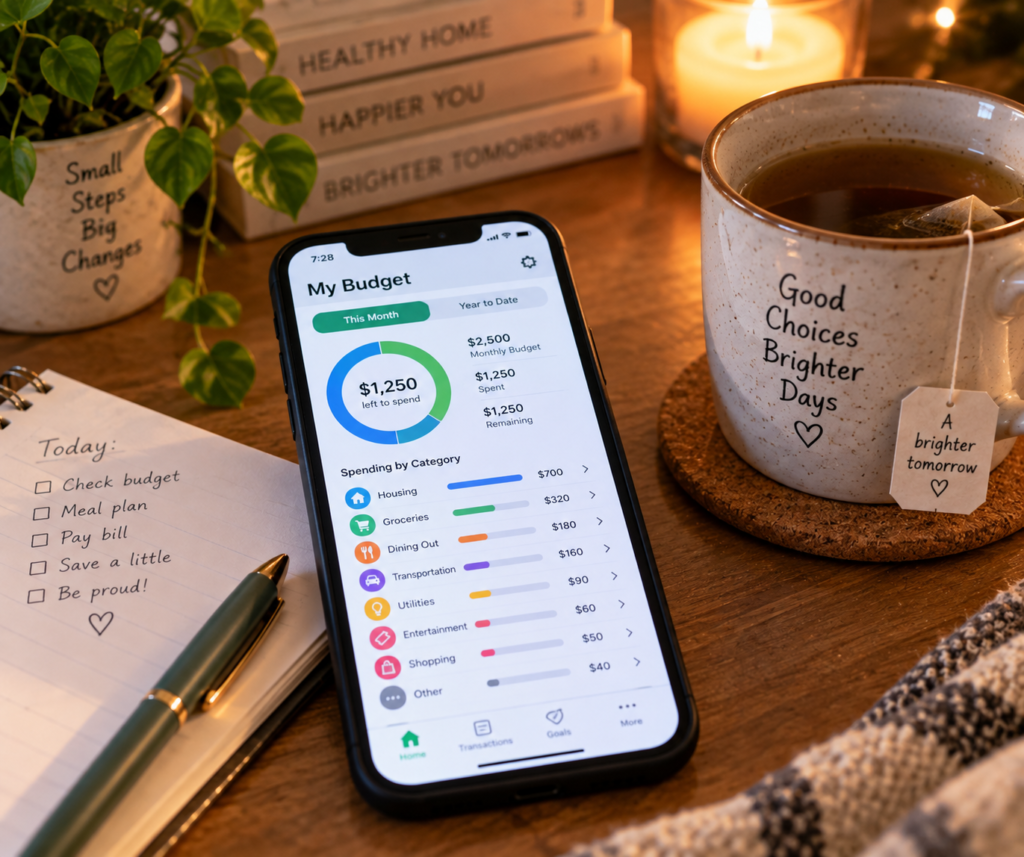
This is the week most people quit, so expect it to feel a little tedious. Track every purchase, even the small ones — the vending machine snack, the parking meter, the impulse online order. A notes app, spreadsheet, or budgeting app all work; the tool matters far less than the consistency.
By day three or four of tracking, patterns start to show up. Maybe weekday lunches are quietly costing more than expected, or a “free trial” subscription never got canceled. Adjust your category amounts as you learn, rather than treating your Week 2 numbers as fixed forever.
This week’s goal: Track spending daily and make one real adjustment based on what you notice.
Week 4: Set Up Systems So It Runs Without You

A budget that depends on willpower every single day will eventually break down. This week is about building guardrails so good habits happen automatically. Set up an automatic transfer to savings on payday, even if it’s small. Consider separate accounts or envelopes for categories that tend to overspend, like dining out. If your bank offers spending alerts, turn them on.
This is also the week to pick a recurring check-in time, ten minutes every Sunday, for example, to glance at your numbers and reset for the week ahead. That short weekly habit does more long-term work than any perfect first month.
This week’s goal: Automate at least one savings transfer and schedule a recurring weekly money check-in.
What Success Actually Looks Like

By day 30, you probably won’t have a flawless system, and that’s normal. Success in month one looks like: you know your numbers, you’ve tracked consistently for a couple of weeks, and you’ve set up at least one system that runs without daily effort. The goal isn’t perfection — it’s momentum. Budgets get easier every month you keep at it, because you’re no longer starting from zero information about your own habits.
Give yourself permission to adjust as you go. A budget is a living document, not a test you pass or fail.

I’m Grayson Watson, your frugal companion and the brain behind this money-saving extravaganza. Strap yourself in, because we’re about to embark on a wallet-friendly adventure like no other. Learn More!