
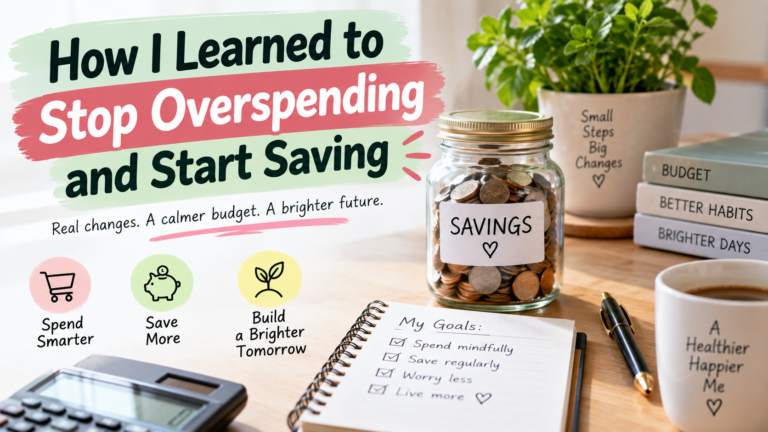
For years, my bank account felt like a leaky bucket. Money came in, and somehow, it always found a way out — a coffee here, a late-night online order there, a subscription I forgot I even had. I wasn’t reckless. I just wasn’t paying attention. And not paying attention turned out to be the most expensive habit I had.
This is the story of how I turned that around — not through some extreme budgeting bootcamp, but through a handful of small, unglamorous changes that actually stuck.
The Wake-Up Call
It wasn’t one big financial disaster that changed things. It was a small, quiet moment: I checked my account before payday and realized I had no idea where the last three weeks of income had gone. No idea. That blank feeling — not guilt, just genuine confusion — was the real turning point. I didn’t need to be shamed into saving. I needed visibility.
Step 1: I Tracked Everything (Even the Embarrassing Stuff)
For one month, I wrote down every single purchase — no judging, just logging. Coffee, takeout, impulse buys, subscriptions, all of it. I didn’t change my behavior yet. I just watched it.
That one month of honest tracking taught me more than any budgeting app ever had. I found three subscriptions I’d forgotten about, a pattern of stress-spending on weekday evenings, and a food delivery habit that was quietly costing more than my rent’s utilities.
Step 2: I Gave Every Dollar a Job
Once I knew where my money was actually going, I stopped using a vague “I’ll just be more careful” approach and started assigning every dollar a purpose before the month began — rent, groceries, savings, fun money, everything. It sounds rigid, but it actually felt freeing. When “fun money” had a set amount, I could spend it guilt-free, because I knew everything else was already covered.
Step 3: I Automated the Boring Part
Willpower is unreliable — some days you have it, some days you don’t. So I stopped relying on it. I set up an automatic transfer to a savings account the same day my paycheck landed, before I had a chance to spend it. Out of sight really does mean out of mind. Within a few months, I had a real emergency fund without ever feeling like I was “trying.”
Step 4: I Made Saving Visible and Rewarding
I started tracking my savings progress the same way I used to track my spending — visually, and often. Watching a number grow, even slowly, became its own kind of motivation. I gave myself small, planned rewards at savings milestones, which made the process feel like progress instead of restriction.
Step 5: I Forgave the Setbacks
Some months were harder than others. I overspent, dipped into savings, and had to start again. The old me would have quit right there. The difference this time was that a bad week didn’t erase the whole system — it was just one data point in a much longer pattern.
Where I Am Now
I’m not perfect with money, and I don’t think that’s really the goal. What changed is that I finally have a system instead of guesswork. I know where my money goes, I know what I’m saving for, and for the first time, my bank account doesn’t feel like a mystery. It feels like something I’m actually in control of.
If you’re standing where I was — confused, a little embarrassed, and not sure where to start — start with the tracking. Everything else follows from that one honest month.

I’m Grayson Watson, your frugal companion and the brain behind this money-saving extravaganza. Strap yourself in, because we’re about to embark on a wallet-friendly adventure like no other. Learn More!