
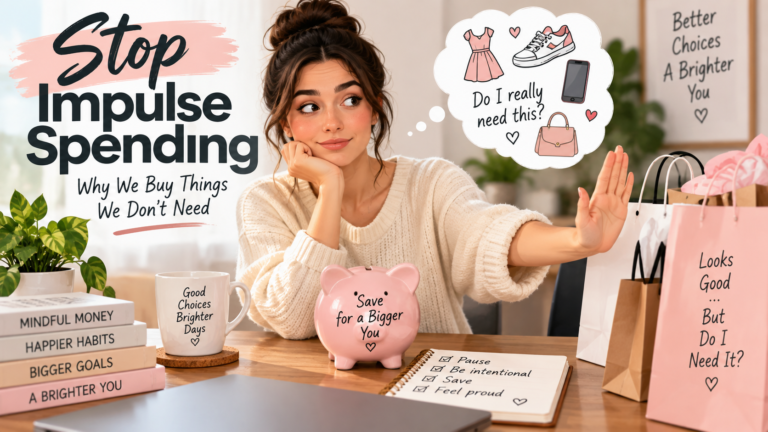
You know the feeling. The package arrives, you tear it open, and for about ten seconds you feel great. Then it goes in a drawer. Or the closet. Or straight into the “I’ll return this eventually” pile that never actually gets returned.
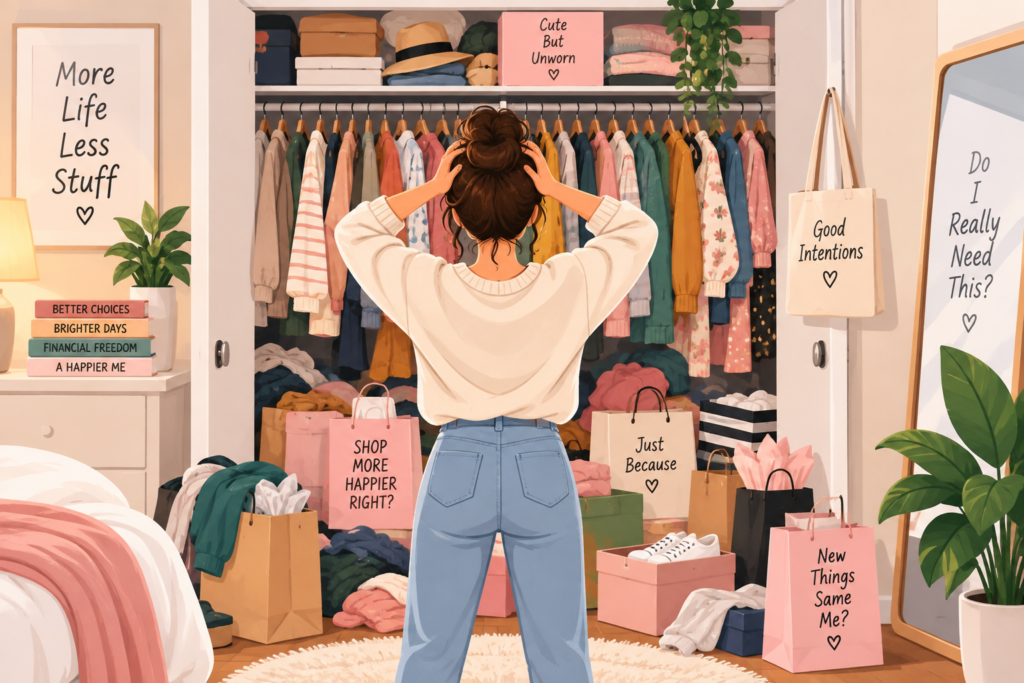
If that sounds familiar, you’re not broken and you’re not bad with money. You’re human. Impulse spending is one of the most common money struggles out there, and it has less to do with willpower than most people think. Understanding why it happens is the first real step toward stopping it.
What Impulse Spending Actually Is
Impulse spending is any purchase made on the spot, without planning, usually driven by emotion rather than need. It’s the candy bar at checkout, the “just one more” item added to your online cart, the sale email that turns into a $60 purchase you weren’t expecting to make.
It’s not really about the item. It’s about the feeling the purchase gives you in that moment.
Why We Buy Things We Don’t Need
1. It’s a Dopamine Hit, Not a Need
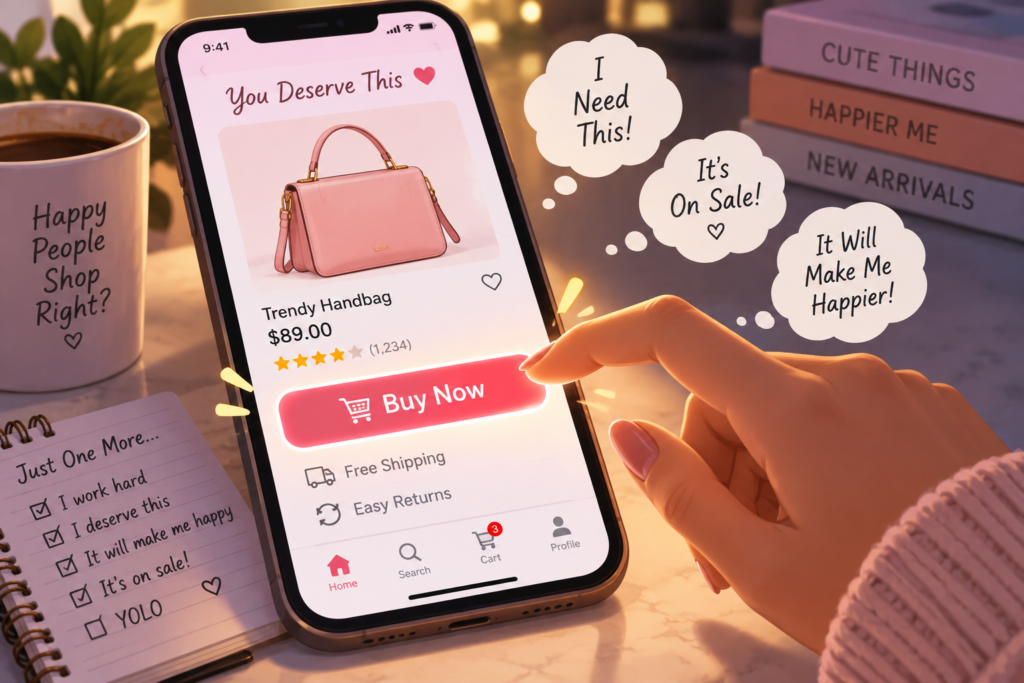
Shopping triggers the same reward system in your brain as other pleasurable activities. The anticipation of a purchase — clicking “buy,” watching the tracking number update, opening the box — releases dopamine. The problem is that dopamine spikes before you even own the thing, which is why the satisfaction fades so fast once it arrives.
2. Emotional Spending Fills a Gap
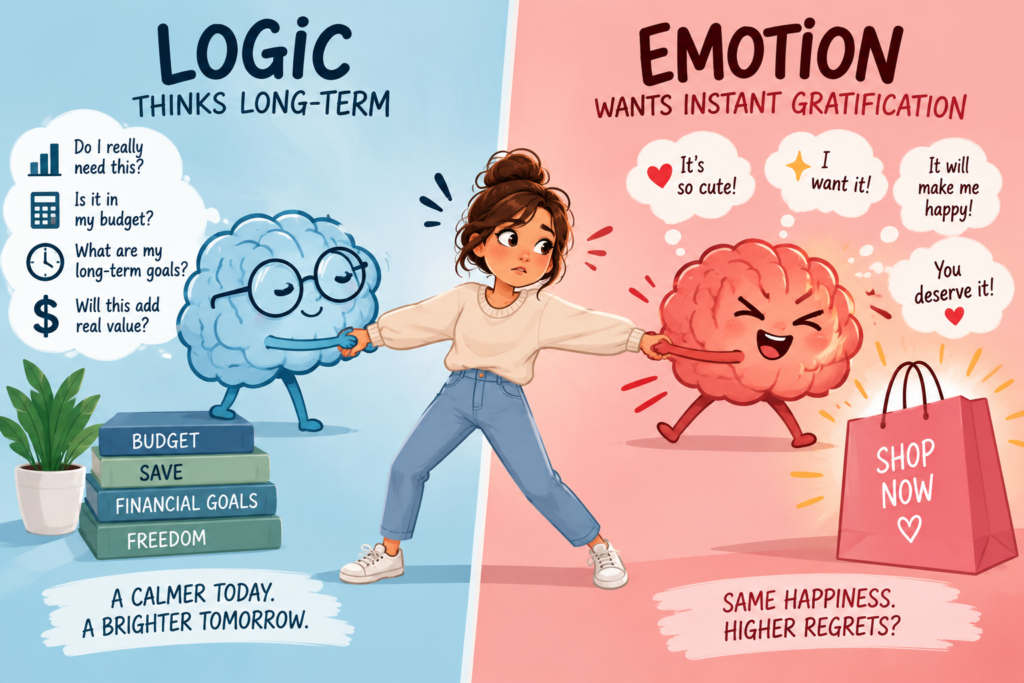
Stressed, bored, sad, anxious, even happy and celebrating — all of these emotional states can trigger a purchase. Shopping becomes a coping mechanism, a quick and easily accessible way to self-soothe. The item itself was never really the point; the emotional relief was.
3. Marketing Is Designed to Bypass Logic
Limited-time offers, countdown timers, “only 2 left in stock,” free shipping thresholds — these aren’t accidents. Retailers spend enormous amounts of money engineering urgency and scarcity because they know it short-circuits rational decision-making and pushes you toward buying now instead of thinking it over.
4. Social Media Normalizes Constant Consumption
Scrolling through hauls, unboxings, and “get ready with me” content quietly resets your idea of what’s normal to buy and how often. What used to feel like a treat can start to feel like a baseline expectation.
5. It’s Easier Than It’s Ever Been
One-click checkout, saved payment info, same-day delivery — every barrier that used to give you time to reconsider a purchase has been removed on purpose. Friction used to be a natural pause button. Now there isn’t one unless you build it yourself.
The Real Cost of Impulse Buying
It’s rarely about one purchase. It’s the accumulation — the subscriptions you forgot you had, the clothes with tags still on, the kitchen gadget used exactly once. Beyond the money itself, impulse spending often comes with a quieter cost: guilt, clutter, and a nagging sense that your spending doesn’t match your actual priorities or goals.

How to Break the Cycle
Give Yourself a Waiting Period
A simple 24–48 hour rule before any non-essential purchase over a set amount (say, $30 or €30) removes the emotional urgency retailers rely on. If you still want it in two days, it was probably a real want, not an impulse.
Ask One Honest Question
Before buying, ask: “Am I buying this because I need it, or because of how I feel right now?” You don’t need a perfect answer — just the pause to ask it is often enough to break the automatic reaction.
Unsubscribe and Unfollow
Remove yourself from marketing emails, retail push notifications, and accounts that make you want to buy things you weren’t thinking about ten minutes ago. Reducing exposure to temptation is far more effective than relying on willpower alone.
Add Friction Back In
Delete saved card info from shopping apps. Use a separate “fun spending” account with a set amount instead of your main card. Anything that adds a small extra step gives your brain time to catch up with your hand.
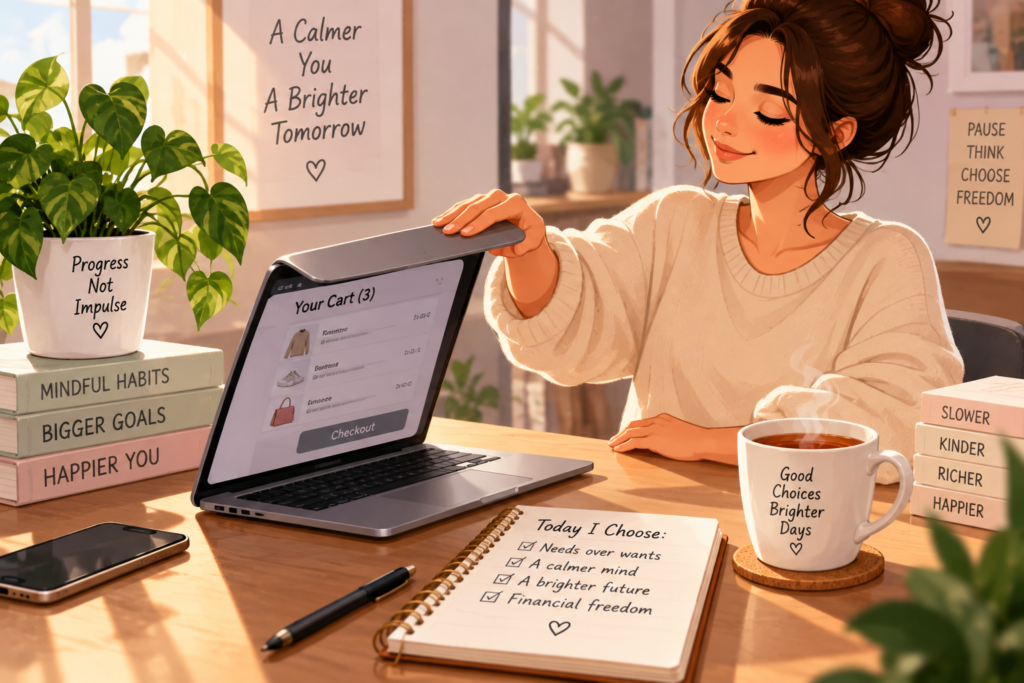
Track the ‘Why’, Not Just the ‘What’
Instead of only tracking what you spend, jot down why you almost bought something and how you were feeling. Patterns show up fast — many people find their impulse buys cluster around specific triggers like stress after work or late-night scrolling.
The Bigger Picture
Breaking the impulse spending cycle isn’t about never buying anything fun again. It’s about making sure your money goes toward things that actually matter to you, instead of quietly leaking out one small “why not” purchase at a time. The goal isn’t restriction — it’s intention.

I’m Grayson Watson, your frugal companion and the brain behind this money-saving extravaganza. Strap yourself in, because we’re about to embark on a wallet-friendly adventure like no other. Learn More!