
Grocery bills have crept up for nearly everyone in recent years, and for a lot of households, food has quietly become one of the biggest monthly expenses after rent or mortgage payments. The instinct for many people is to reach for coupons, but clipping and organizing coupons takes time, and the savings are often smaller than expected — a few dollars here and there on items you may not have needed in the first place.
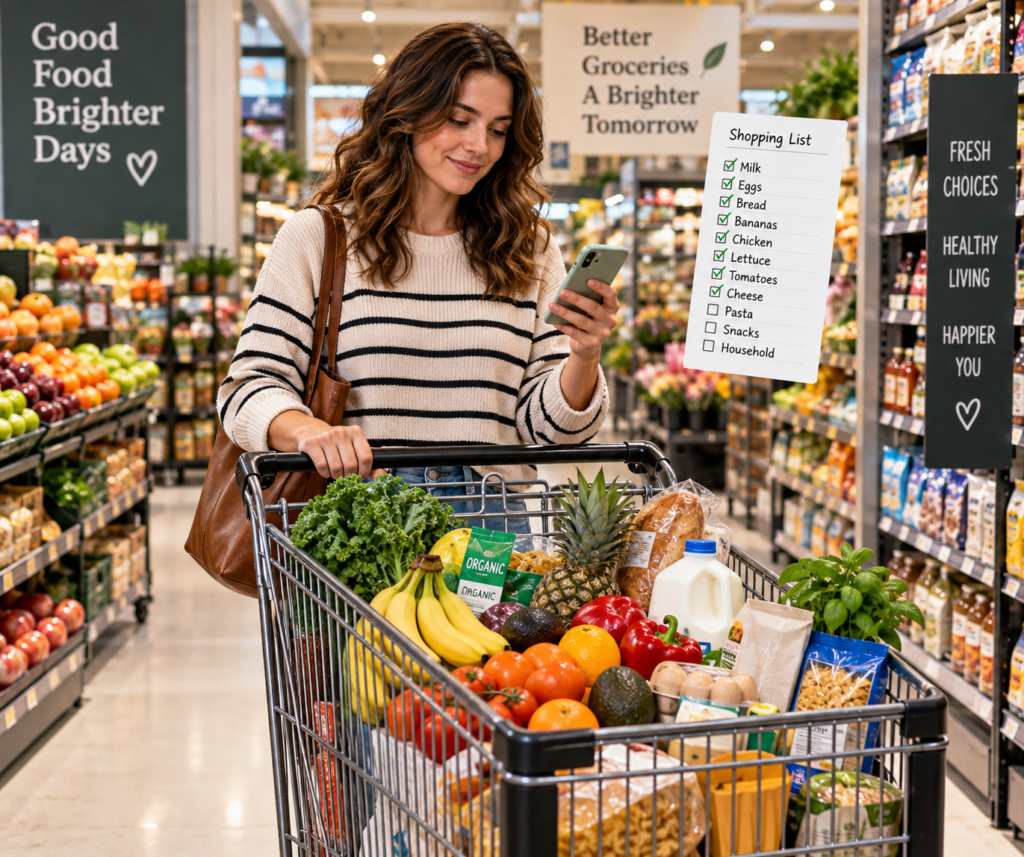
The truth is that the biggest grocery savings don’t come from coupons at all. They come from how you shop: what you buy, when you buy it, how you plan around it, and how much of it actually gets eaten instead of thrown away. Households that cut their grocery bills significantly almost always do it through a handful of consistent habits, not through hunting for discount codes.
This guide walks through a complete, practical system for cutting your grocery spending dramatically — in many cases by 40-50% — without ever touching a coupon.
Why Coupons Aren’t the Real Answer

Coupons get a lot of attention because they feel like “free money,” but for most everyday shoppers, they have real limitations.
Coupons are mostly for processed and branded items. The healthiest, most affordable staples — fresh produce, dried beans, rice, oats, eggs — rarely have coupons available, meaning coupon users often end up buying more processed food just to “make use of” a discount.
They take real time to find, clip, and organize. For many households, the hours spent hunting for and organizing coupons aren’t worth the modest savings generated, especially compared to other strategies that take less effort and save more money.
They can encourage overbuying. A coupon for “buy two, get one free” often leads to purchasing three of something you only needed one of, which isn’t actually a saving if the extra items go unused or expire.
None of this means coupons are useless — they can help on specific, planned purchases. But building your entire savings strategy around them misses the much bigger and more reliable opportunities available through smarter overall shopping habits.
Step 1: Know Your Baseline Spending
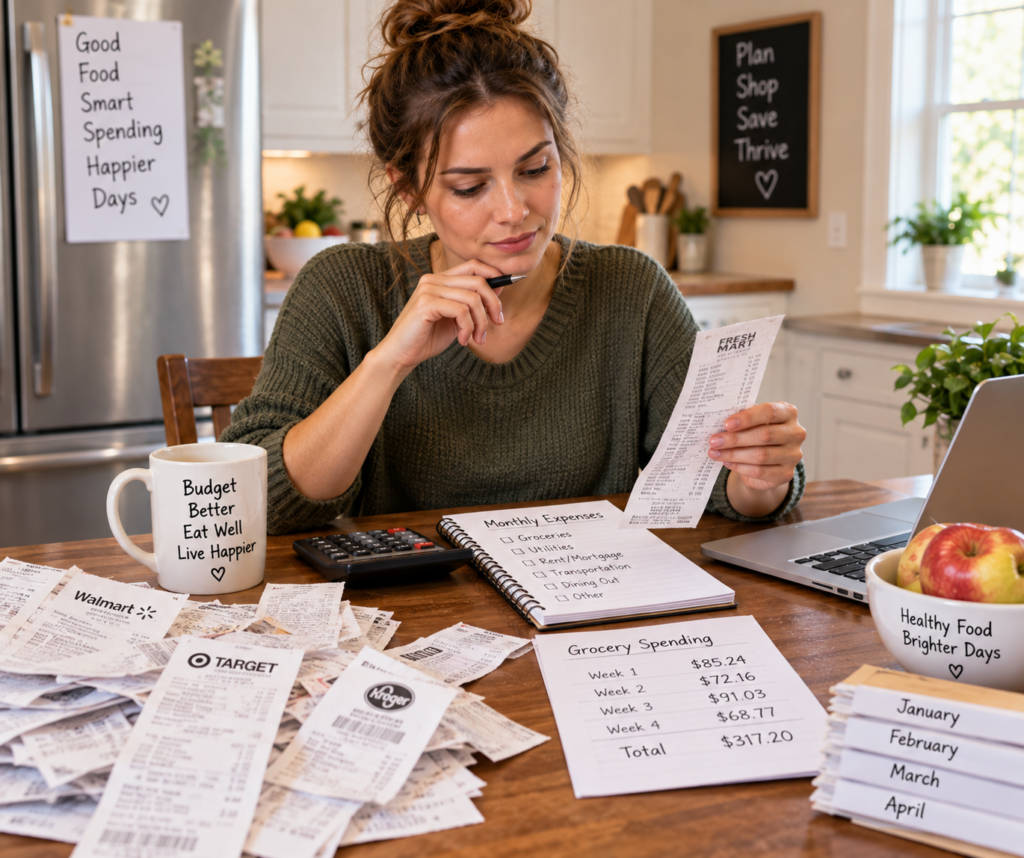
You can’t cut a bill in half if you don’t know what it currently is. Before changing anything, spend one month tracking exactly what you spend on groceries — every trip, every store, every online order. Bank and card statements make this easy to reconstruct if you don’t already track spending closely.
Once you have a real number, break it down further if possible:
- How much goes toward fresh produce and meat
- How much goes toward packaged and processed foods
- How much goes toward snacks and convenience items
- How much goes toward eating out disguised as “grocery” spending (like prepared deli meals or coffee shop stops)
This baseline gives you a clear target and helps you identify which categories have the most room for cuts.
Step 2: Plan Meals Around What’s Already in Your Kitchen

One of the single biggest sources of grocery waste — and therefore overspending — is buying food that duplicates what you already have, while what’s already there goes bad and gets thrown out.
Before planning your shopping list, take five minutes to check your fridge, freezer, and pantry. Build your meals for the week around what needs to be used soon, then fill in gaps with a shopping list rather than starting from scratch every time.
This single habit alone can meaningfully reduce food waste, which for the average household accounts for a significant and often underestimated portion of total grocery spending — money spent on food that’s ultimately thrown directly in the trash.
Step 3: Build a Weekly Meal Plan Before You Shop
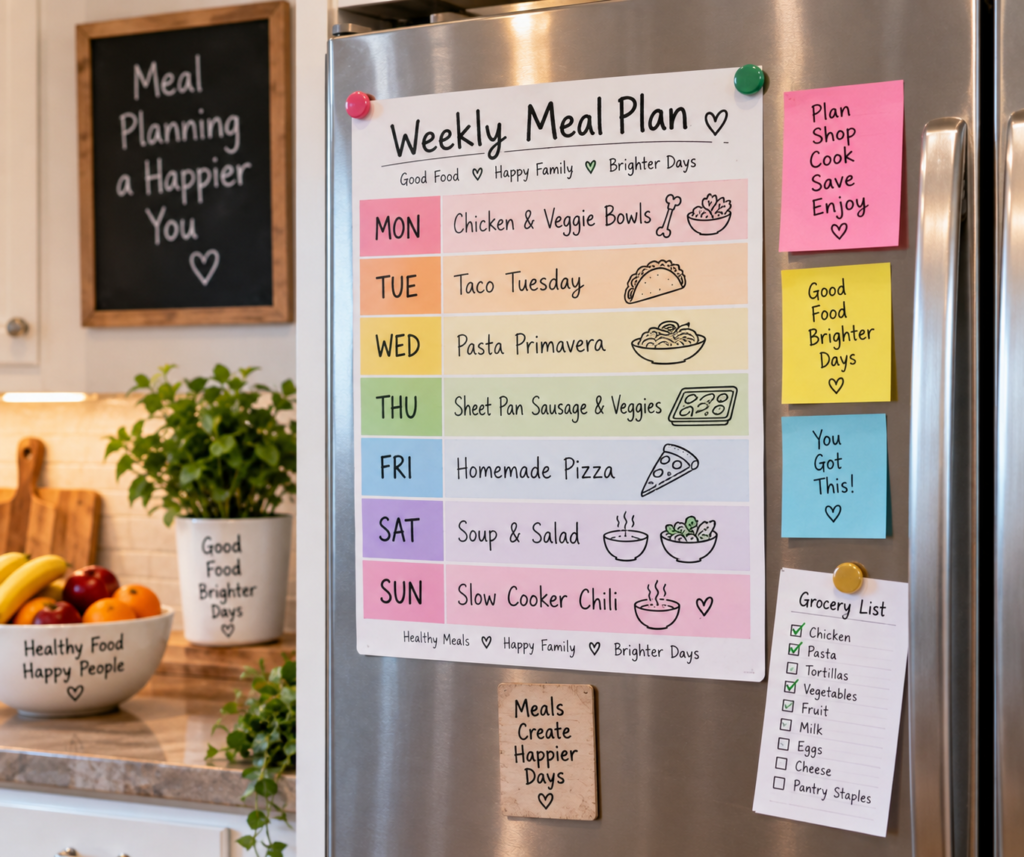
Shopping without a plan is one of the most reliable ways to overspend, because it leads to impulse purchases and duplicate items, while also increasing the number of separate trips you make (each one an opportunity for additional unplanned spending).
Spend 15-20 minutes each week mapping out your meals before you shop:
- Pick 4-6 dinners for the week, allowing for leftovers or an “eat whatever’s left” night
- Base meals around what’s on sale or already in your pantry
- Build your shopping list directly from that meal plan, rather than shopping first and figuring out meals later
- Include breakfasts and lunches if you tend to buy convenience items for those meals otherwise
A written plan, even a rough one, dramatically reduces the number of unplanned purchases at the store, since you’re shopping with a clear purpose rather than browsing aisles for inspiration.
Step 4: Shop With a List and Stick to It
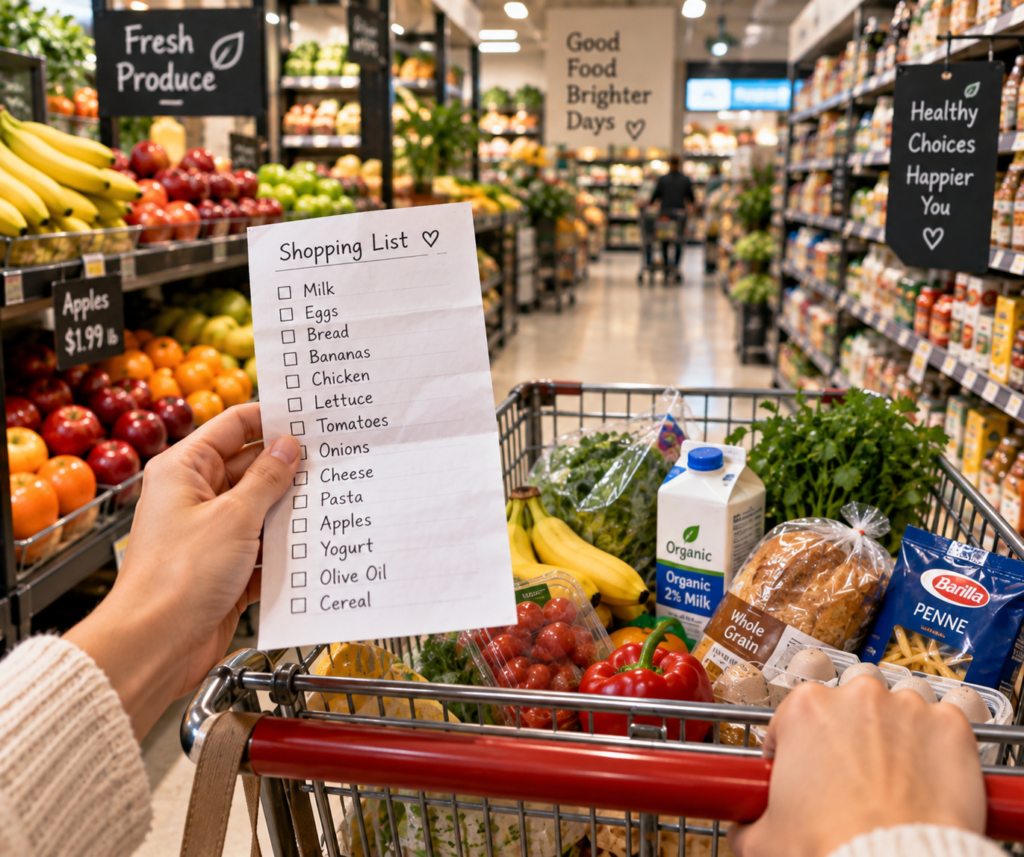
This sounds obvious, but it’s one of the most underused tools for cutting grocery spending. Studies on shopping behavior consistently show that list-based shoppers spend significantly less than those who shop without one, largely because store layouts are specifically designed to encourage impulse purchases.
A few rules make list-based shopping even more effective:
Write your list by store section, grouping items by produce, dairy, pantry, and so on, so you move through the store efficiently rather than backtracking, which reduces exposure to impulse displays.
Set a rule for unplanned items. Some flexibility is fine, but consider a personal rule like “only one unplanned item per trip” to keep small additions from snowballing into a much larger bill.
Shop with a full stomach. Shopping hungry is one of the most well-documented triggers for impulse buying, particularly around snacks and prepared foods.
Avoid shopping with easily distracted kids when possible, or involve them directly in checking items off the list, turning the trip into a cooperative task rather than a browsing opportunity.
Step 5: Compare Unit Prices, Not Sticker Prices
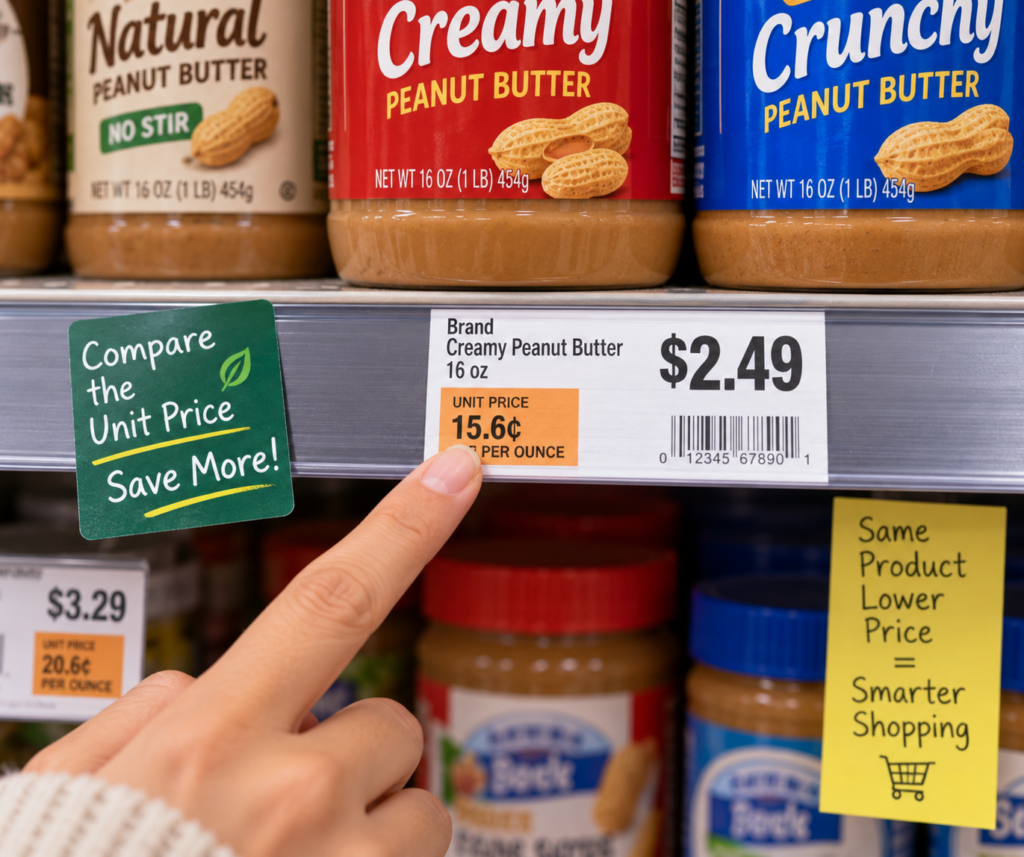
Bigger packages and name brands often look like better deals but frequently aren’t. The unit price — usually printed in small text on the shelf tag — tells you the actual cost per ounce, pound, or item, which is the only reliable way to compare value across different package sizes and brands.
Get in the habit of glancing at unit price rather than the large, more prominent total price. A large “family size” package isn’t always cheaper per unit than a smaller one, especially when it’s on a featured display or is a name brand competing with a cheaper generic version sitting right next to it.
Step 6: Buy Store Brands and Generics
Store brands, also called generic or private-label products, are often manufactured in the very same facilities as their name-brand counterparts, using similar or identical ingredients, but sold at a meaningfully lower price simply because they don’t carry the marketing costs of a national brand.
For staples like flour, sugar, canned vegetables, pasta, rice, and basic dairy products, the difference in quality between store brand and name brand is often negligible, while the price difference can be substantial. Reserve name-brand purchases for the specific items where you’ve genuinely noticed a difference in taste or quality that matters to you, and default to store brand for everything else.
Step 7: Reduce Meat Consumption Strategically
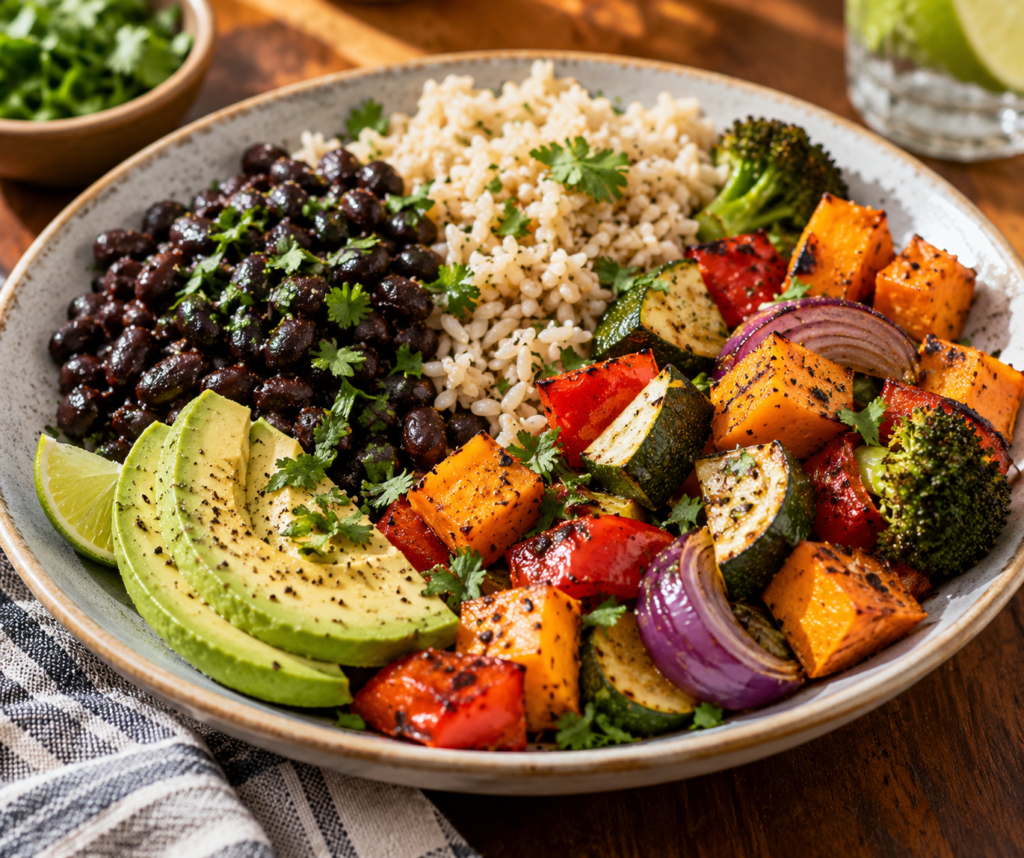
Meat, particularly beef and specialty cuts, is typically one of the most expensive items per pound in any grocery cart. This doesn’t mean cutting meat out entirely, but strategically reducing how much of it you buy and building more meals around less expensive proteins can meaningfully lower your total bill.
Try a few “meatless” meals per week. Beans, lentils, eggs, and tofu are all significantly cheaper per gram of protein than most meat, and can be built into satisfying, filling meals.
Buy cheaper cuts and proteins. Chicken thighs are typically cheaper than chicken breasts, and ground meat is typically cheaper than steaks or specialty cuts, while still working well in many recipes.
Stretch meat further in recipes. Dishes like soups, stir-fries, and casseroles let a smaller amount of meat go further by combining it with vegetables, grains, and beans, reducing the total amount needed per meal.
Buy in bulk when meat is on sale, and freeze portions. Meat freezes well, so buying larger quantities during sales and portioning it into freezer bags can meaningfully lower your average cost per pound over time.
Step 8: Shop Seasonally and Buy Produce Smart
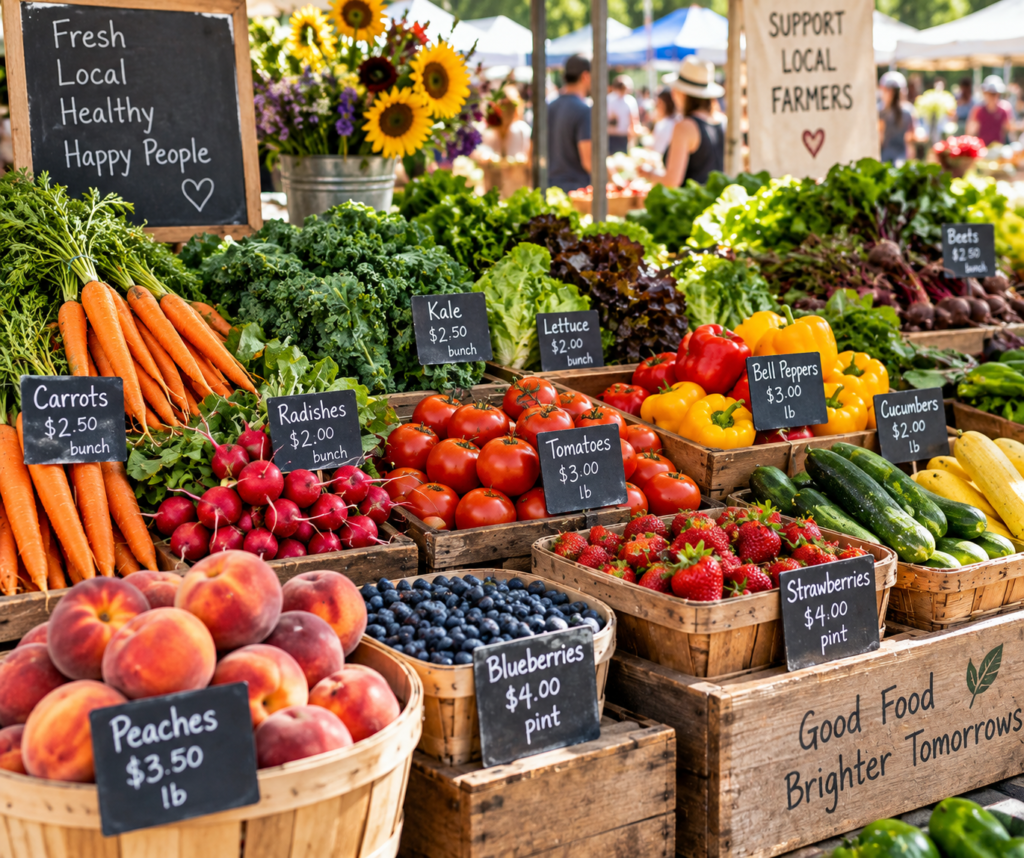
Produce prices fluctuate significantly based on what’s in season, since out-of-season items typically need to be shipped from farther away, driving up their cost.
Build meals around what’s currently in season, which tends to be both cheaper and fresher than out-of-season alternatives.
Consider frozen produce for out-of-season items. Frozen fruits and vegetables are typically flash-frozen at peak ripeness, retain comparable nutritional value to fresh produce, and cost significantly less than fresh out-of-season options while lasting much longer without spoiling.
Buy whole produce instead of pre-cut. Pre-cut fruits and vegetables carry a substantial price premium for the convenience of prep work you can easily do yourself in just a few minutes.
Check for “ugly” or discounted produce sections. Many stores now sell slightly imperfect produce at a discount specifically to reduce food waste, and the taste and nutritional value are typically identical to their more visually perfect counterparts.
Step 9: Cook in Batches and Use Leftovers Deliberately
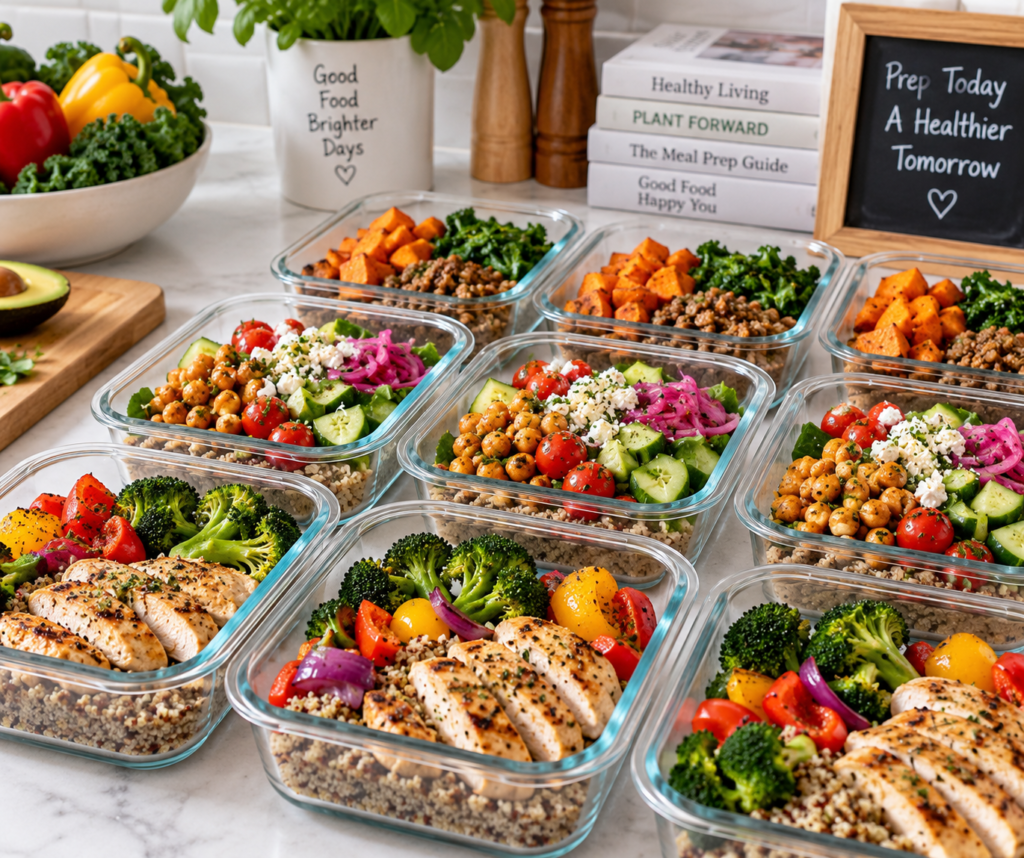
Cooking larger batches and deliberately planning for leftovers reduces both your grocery spending and the temptation to order takeout on nights when you don’t feel like cooking.
Cook double portions of dinners that freeze well, like soups, stews, casseroles, and pasta dishes, and freeze half for a future night when you don’t want to cook from scratch.
Plan a “leftovers night” into your weekly meal plan rather than letting leftovers sit forgotten in the fridge until they spoil and get thrown away.
Repurpose ingredients across multiple meals. A roasted chicken, for example, can become dinner one night, sandwiches the next day, and a soup base by the end of the week, stretching the cost of a single purchase across several meals.
Step 10: Reduce Food Waste Deliberately
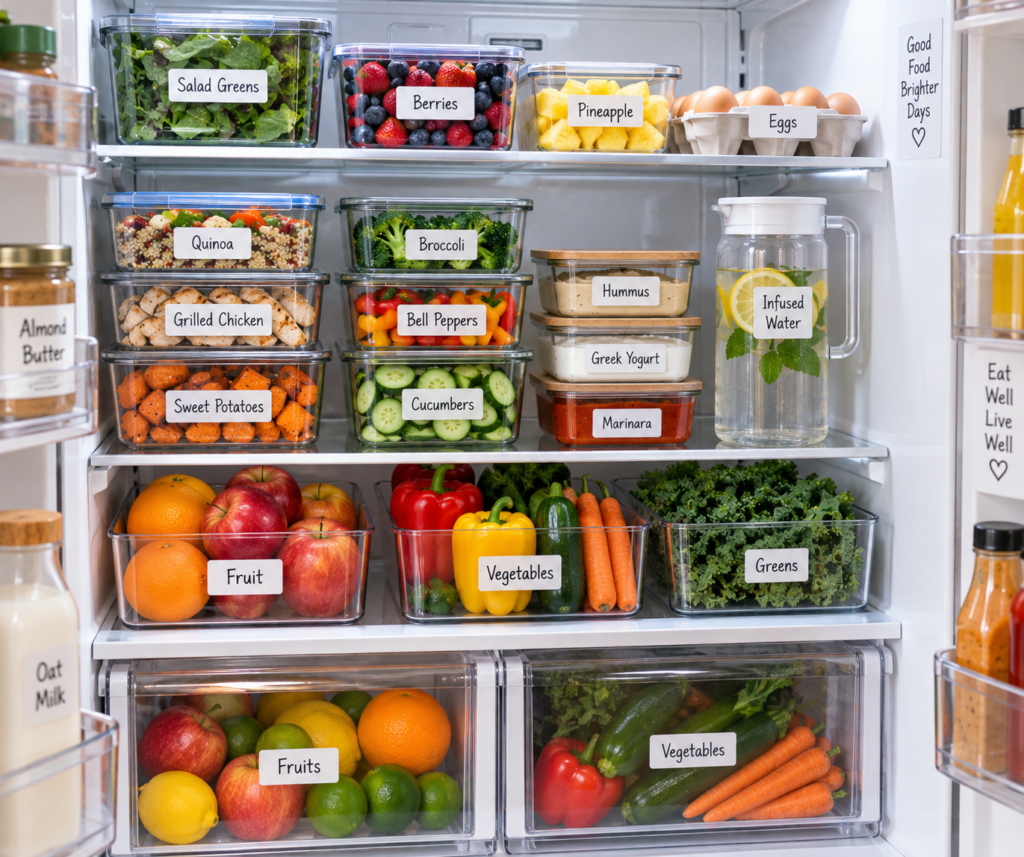
Food waste is one of the largest hidden costs in most grocery budgets. Estimates suggest a significant percentage of food purchased by the average household is ultimately thrown away, representing pure lost money with nothing gained in return.
Store produce properly to extend its life. Different fruits and vegetables have different ideal storage conditions, and simple adjustments — like keeping certain produce out of the fridge or storing herbs in water — can meaningfully extend freshness.
Use a “eat first” bin in your fridge for items nearing the end of their freshness, placed at eye level so they don’t get forgotten behind newer purchases.
Freeze food before it spoils, rather than after. Bread, meat, and even some dairy products can often be frozen for later use instead of being thrown away when you realize you won’t use them in time.
Get creative with odds and ends. Vegetable scraps can become homemade stock, slightly overripe fruit can go into baked goods or smoothies, and wilting greens can be cooked into soups rather than discarded.
Step 11: Limit Convenience and Pre-Packaged Items
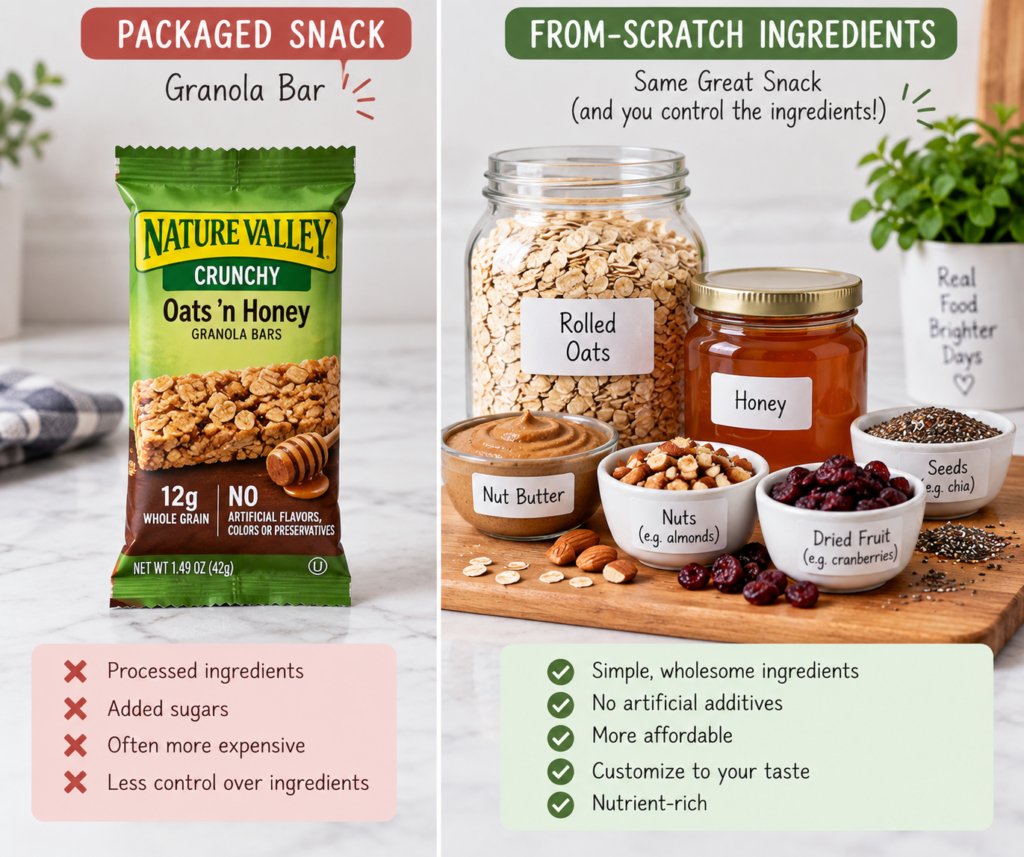
Convenience costs money. Pre-cut vegetables, individually packaged snacks, pre-made meals, and single-serving portions are almost always more expensive per unit than their bulk, from-scratch equivalents.
Where your schedule allows, consider:
- Buying snacks in bulk and portioning them yourself into reusable containers, rather than buying individually wrapped packs
- Making your own versions of convenience items, like granola bars, trail mix, or pre-made lunches, which are often significantly cheaper and just as quick once you build a routine
- Reserving pre-packaged convenience items for genuinely busy weeks rather than as a default, everyday habit
Step 12: Choose the Right Store and Shop Less Often

Not all grocery stores are priced the same, and the store you default to out of habit or convenience may not be the most affordable option available to you.
Compare prices across the stores in your area, if you have more than one nearby option. Discount and warehouse-style grocery stores can offer meaningfully lower prices on staples compared to traditional full-service supermarkets.
Reduce your shopping frequency. Each additional trip to the store is another opportunity for impulse purchases. Shopping once a week with a solid plan, rather than several smaller trips, tends to result in lower total spending.
Consider a hybrid approach. Some households save by buying staples and non-perishables in bulk from a warehouse store, while buying fresh produce more frequently from a regular grocery store or farmers market.
Final Thoughts
Cutting your grocery bill in half doesn’t require coupon books, hours of clipping, or complicated spreadsheets. It comes down to a set of consistent, practical habits: knowing your baseline spending, planning meals around what you already have, shopping with a list, comparing real unit prices, leaning on store brands, and being deliberate about reducing food waste.
None of these changes require sacrificing good food or family favorites. If anything, many households find that planning meals more intentionally leads to better eating, not worse — home-cooked meals built around what’s on sale and in season, rather than expensive convenience items grabbed in a rush.
Start with just two or three of the strategies in this guide, build them into a habit over a few weeks, and then layer in more. Small, consistent changes to how you shop and cook add up to real, lasting savings — often far more than any coupon ever could.

I’m Grayson Watson, your frugal companion and the brain behind this money-saving extravaganza. Strap yourself in, because we’re about to embark on a wallet-friendly adventure like no other. Learn More!